
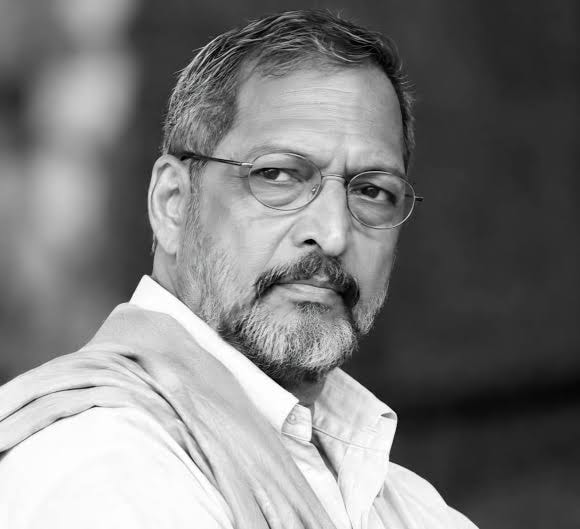
Nana Patekar: The Actor Who Never Needed Stardom to Prove His Worth
Nana Patekar died in Goa on October 8, 2026, at the age of 75, after suffering a cardiac arrest.
By The Film World Edit Team·October 8, 2026
Nana Patekar was never a conventional Bollywood star. He did not look like one, live like one or behave like one. Yet when he walked into a scene, he could dominate it without needing any of the traditional tools of stardom.
Nana Patekar died in Goa on October 8, 2026, at the age of 75, after suffering a cardiac arrest. With his passing, Indian cinema has lost one of its most distinctive performers — an actor whose career moved effortlessly between theatre, parallel cinema, mainstream blockbusters, comedy and Marathi cinema.
What made Nana special was not simply his voice, although that voice became unmistakable. It was his intensity, unpredictability, anger, vulnerability and complete disregard for what a leading man was supposed to look or sound like.
From Gaman to Parinda
Nana began his film career with Gaman in 1978 after establishing himself in theatre. The early years were about building credibility rather than chasing stardom. He appeared in films such as Aaj Ki Awaaz, Ankush, Pratighaat, Andhaa Yudh, Mohre and Trishagni, slowly creating a reputation as an actor who could bring tremendous force to difficult characters.
Then came Parinda in 1989. As Anna, Nana created one of Hindi cinema's most memorable gangsters. The performance won him the National Film Award and Filmfare Award for Best Supporting Actor and announced that here was an actor who could make a supporting role feel larger than the film around him.
He followed it with Prahaar: The Final Attack, which he also directed, and then films including Raju Ban Gaya Gentleman, Tirangaa, Krantiveer, Agni Sakshi, Khamoshi: The Musical, Ghulam-E-Mustafa, Yeshwant, Wajood and Hu Tu Tu. These films were not all box-office successes, but they established something important: Nana could move between commercial cinema and challenging material without changing the intensity of his craft.
As Pratap Narayan Tilak in Krantiveer, Nana delivered the kind of performance that becomes part of popular culture. The film was a major commercial success and won him the National Film Award for Best Actor, along with Filmfare and Screen Awards. Agni Sakshi brought him another National Award, this time for Best Supporting Actor.
National Film Awards
Hits, flops and unforgettable characters
Nana's filmography was never a straight line of hits. There were successes such as Krantiveer, Agni Sakshi, Yeshwant, Bhoot, Apaharan, Taxi No. 9211, Welcome, Raajneeti, Welcome Back and Golmaal Again. There were also disappointments. But Nana had the rare ability to survive a flop without allowing it to define him.
He could play an encounter specialist in Ab Tak Chhappan, a taxi driver in Taxi No. 9211, a politician in Raajneeti, Joint Commissioner Rakesh Maria in The Attacks of 26/11, and Dr Prakash Amte in Dr Prakash Baba Amte – The Real Hero.
And then, in 2007, he became a comedy star without losing his identity. Welcome gave us Uday Shetty. Nana's Uday Shetty, opposite Anil Kapoor's Majnu Bhai, became a pop-culture phenomenon. The same actor who had built his reputation on rage, violence and intense drama was suddenly making audiences laugh simply by delivering a line or giving a look.
"He could make you uncomfortable in Parinda, angry in Krantiveer, emotional in Khamoshi, and laugh uncontrollably in Welcome."
Natsamrat
For Marathi cinema, Natsamrat was another defining chapter. As Ganpatrao Belwalkar, a retired theatre actor confronting loneliness, family and the loss of everything that once gave his life meaning, Nana delivered a deeply emotional performance. The film became a major critical and commercial success.
Politics and public life
Nana was close to several political leaders and was approached more than once to contest elections, but he never entered electoral politics. He often said his blunt nature would not suit party politics. He preferred speaking his mind from outside the political system.
Away from Mumbai, Nana lived a relatively simple life. He spent considerable time at his farmhouse near Pune, where he farmed and lived with animals. His connection with farmers eventually became much bigger through NAAM Foundation, which he founded with actor Makarand Anaspure in 2015 to help farmers and rural communities affected by drought and distress.
Shah Rukh Khan and the Nana connection
Before Shah Rukh became a superstar, he reportedly found himself at a police station following a confrontation with a journalist. He was allowed one phone call and called Nana. Nana intervened and helped him get out. Shah Rukh never forgot that gesture. After Nana's death, Shah Rukh remembered him as a mentor, teacher, critic and friend.
Akshay Kumar, who worked with Nana in Welcome and later Housefull 5, remembered him as an actor who was completely unique, praising his voice, intensity and honesty. Manoj Bajpayee remembered Nana as an inspiration for generations of actors who came to Mumbai hoping to make a place for themselves.
The controversy that cannot be ignored
Any honest obituary of Nana Patekar also has to acknowledge the controversy that followed him. In 2018, actress Tanushree Dutta accused Nana of sexual harassment relating to the 2008 shooting of Horn 'Ok' Pleassss. Nana denied the allegations. Mumbai Police subsequently filed a B-summary report, stating that it had found no evidence against him. Dutta disputed that conclusion and questioned the investigation. The allegations became an important part of India's #MeToo conversation and remain part of Nana's public record.
The legacy
Nana Patekar's career was extraordinary because it was impossible to put him in one box. He could make you uncomfortable in Parinda, angry in Krantiveer, emotional in Khamoshi, nervous in Ab Tak Chhappan, think in Raajneeti, and laugh uncontrollably in Welcome.
Indian cinema will remember the voice, the eyes, the pauses, the anger, the humour and those unforgettable performances. But perhaps what will remain most is his individuality. Nana Patekar did not need to be like anyone else. He only needed to be Nana Patekar. And there will never be another one quite like him.